More French
Collection 1 > France

More French
Outside of Quimper, the majority of French piggy banks come from regions with a strong faience tradition. Strasbourg and Lunéville (Keller & Guérin) are the most important: they produced many decorative figures, including animals, in colorful floral settings from the 18th and especially 19th centuries. Gien also supplied faience objects and occasional figures, recognizable by their sleek, often historicizing decor style. Nevers and Rouen are mainly known for tableware and religious pieces, but their faience tradition forms the basis for later figurative work elsewhere. Niderviller made refined modeling work, although piggy banks are rare there. Limoges, although a leading porcelain center, did not produce piggy banks; porcelain was simply used less for these types of figures. Modern brands such as Revol and Emile Henry focus on household pottery and play no role in piggy bank production.
Eastern France
In Lorraine the cities of Lunéville, Sarreguemines and Saint-Clement are the original centers of the earthenware industry. From 1812 on, and throughout the following century, it was the seat of Lunéville "Keller and Guerin" (Société KG). In 1922, the factories of Lunéville and St. Clement's were bought by Edouard Fenal, who also owned the factory in Badonviller. The Fenal family expanded their ‘empire’ in 1979 , buying Sarreguemines where since 1968 Lunéville pottery is produced with the name "KG Lunéville". In December 2006 the Fenal Group merges with the group "Faïence et Cristal de France consisting of the factories St. Clément, Niderviller, Vallerysthal and Portieux, all factories established in the 18th century with a prestigious past. This new group . "Terres d'Est" preserves the heritage, the ancient tradition, of Lorraine earthenware.



Miscellaneous
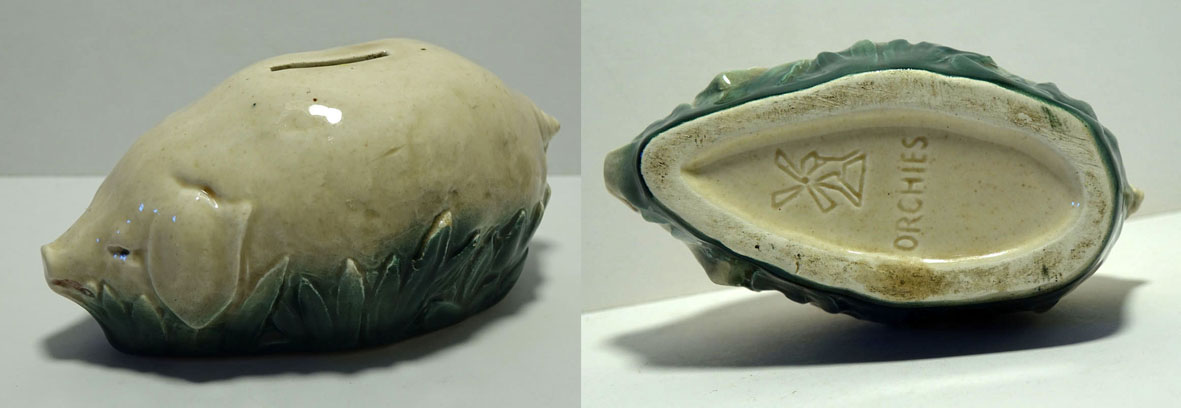
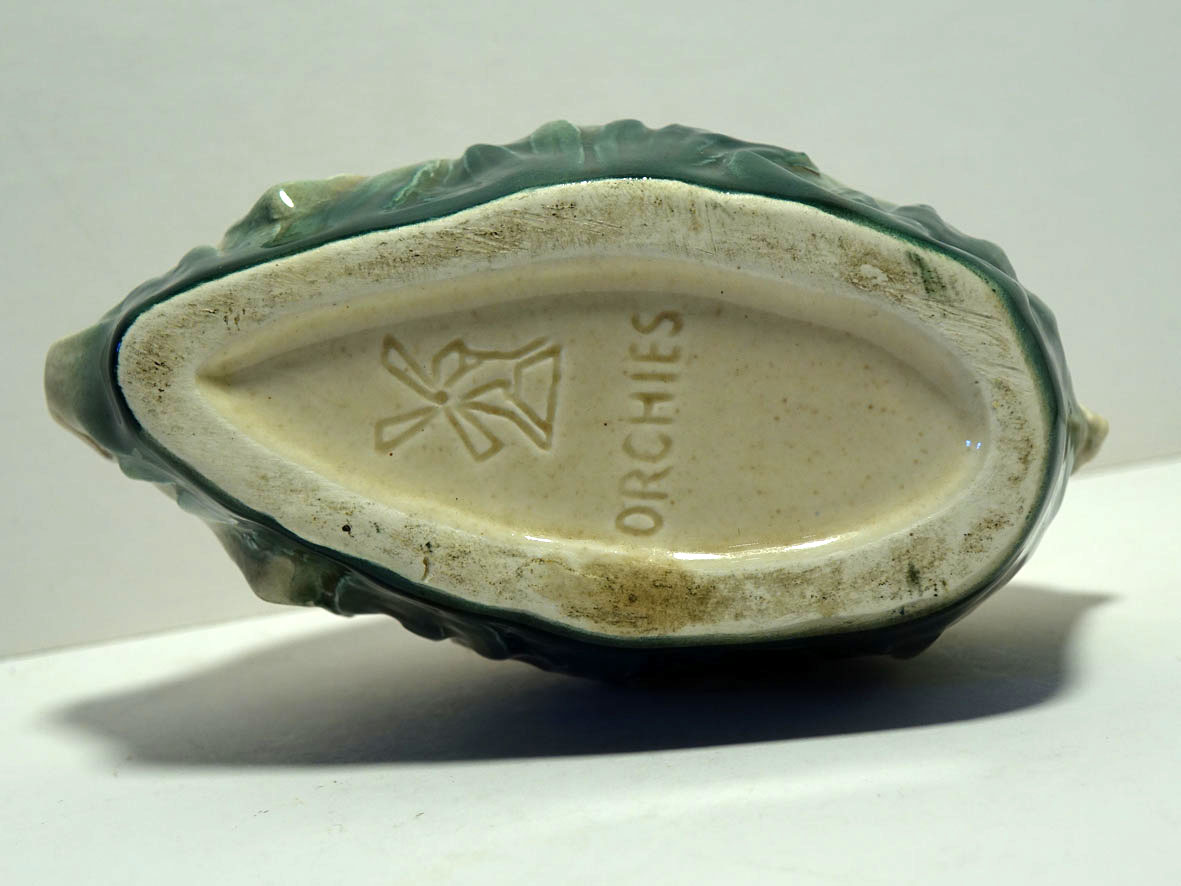
Pondering on French pottery one immediately thinks of Limoges porcelain. But there is much more French pottery and often in comparison to Limoges severely under valuated. Superb pottery is or was made in: Lorraine (Lunéville, Saint Clement, Sarregemines), Northern France near Lille (St Amand, and Hamages Orchies), Alsace, Rhone-Alpes, Bourgogne (St Uze), Quimper, Bordeaux, etc.

Revol, Saint Uze. Art Deco, dated ± 1920-1939. High 13,5 cm. Seated gentlemen with their umbrella. Symbol of dignity.
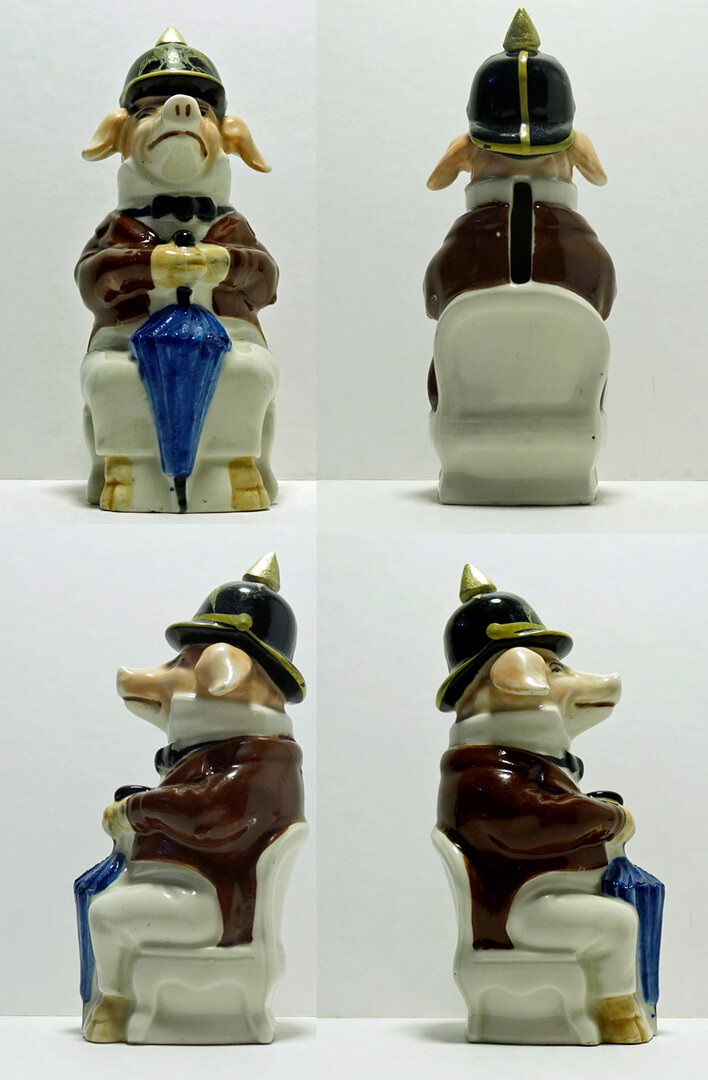
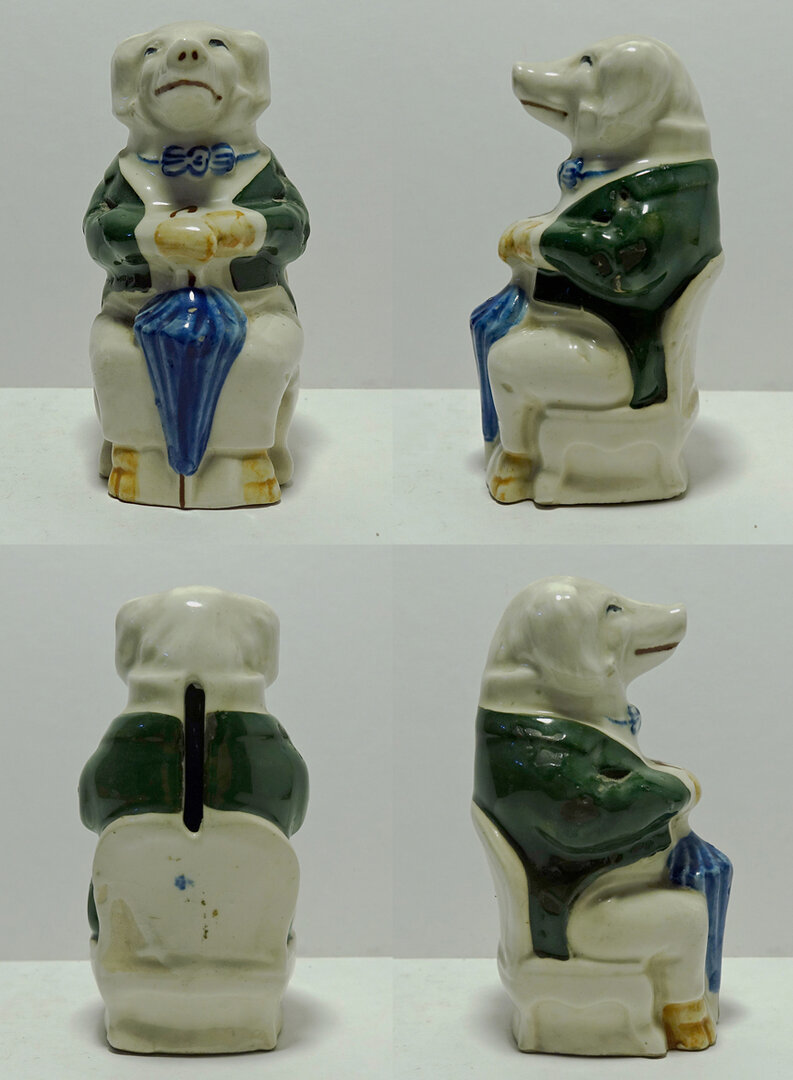
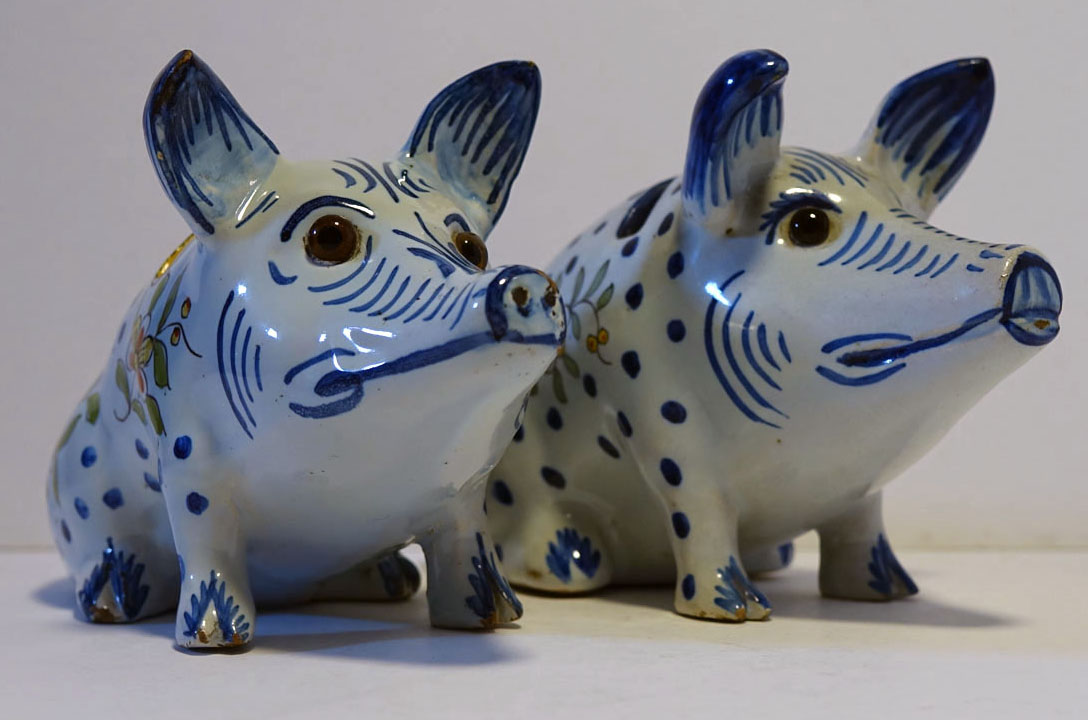
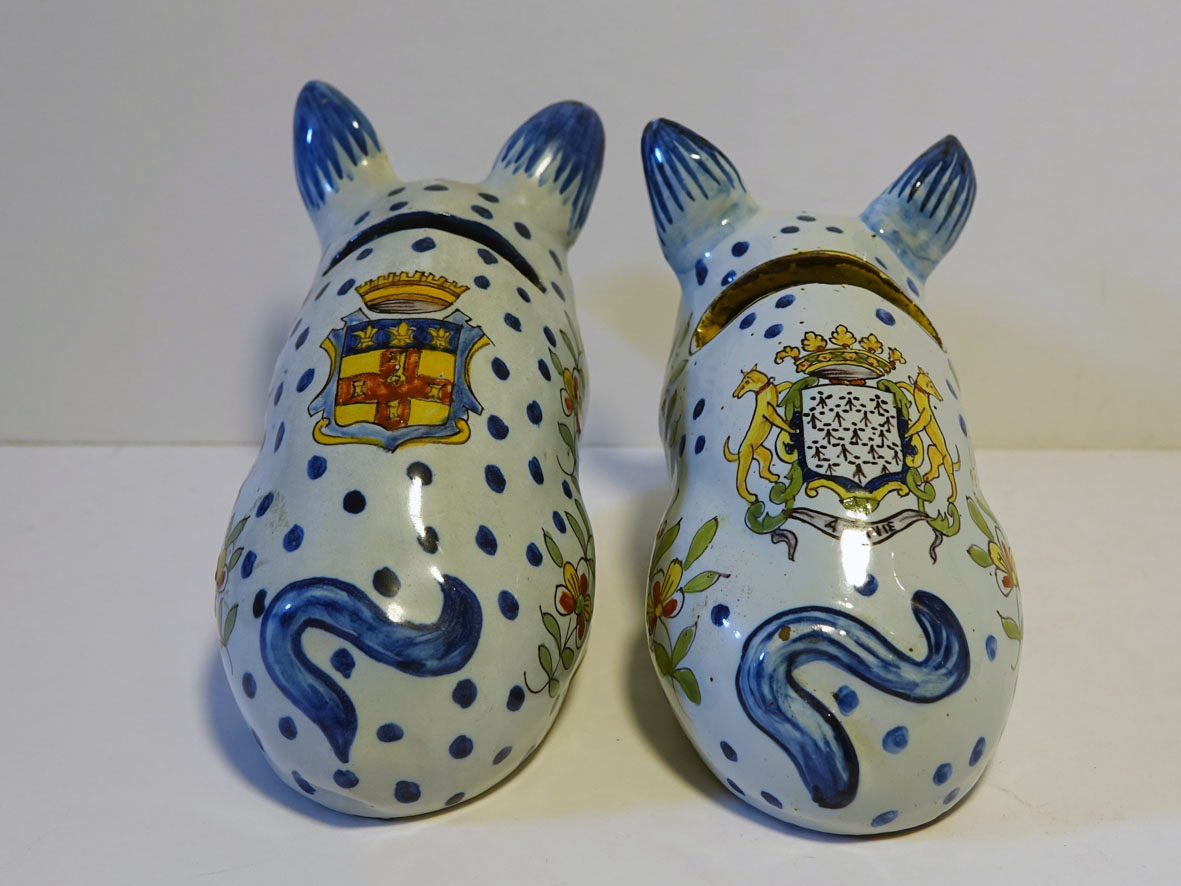
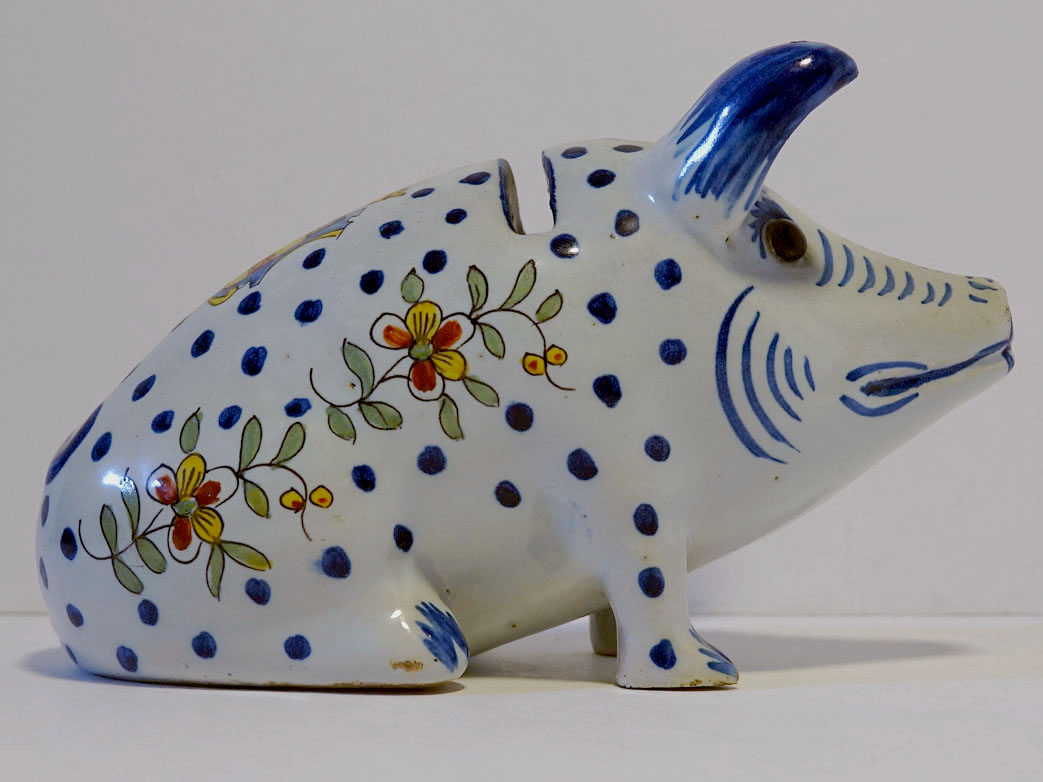
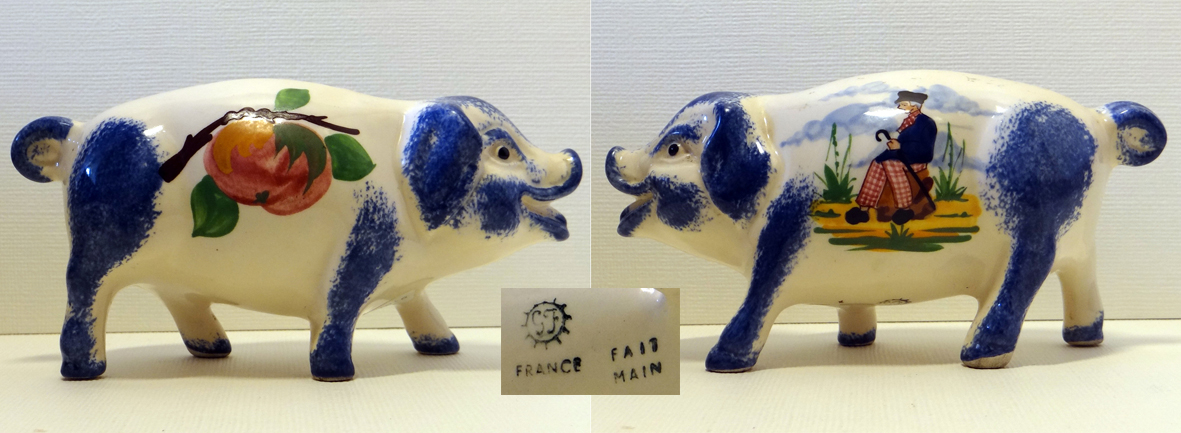
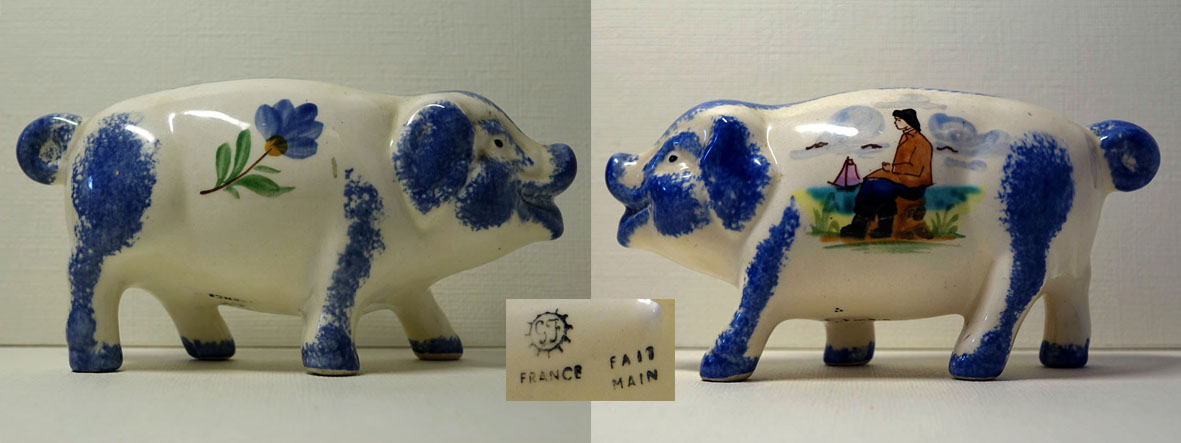
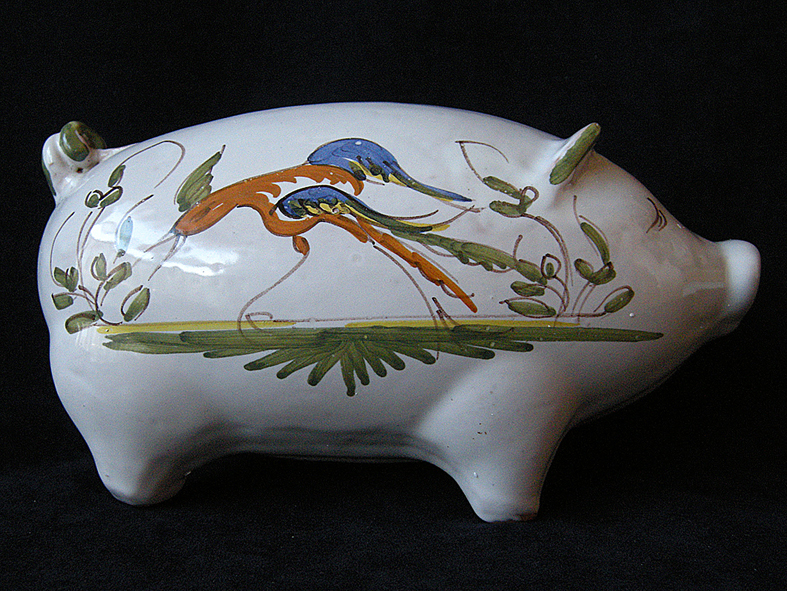
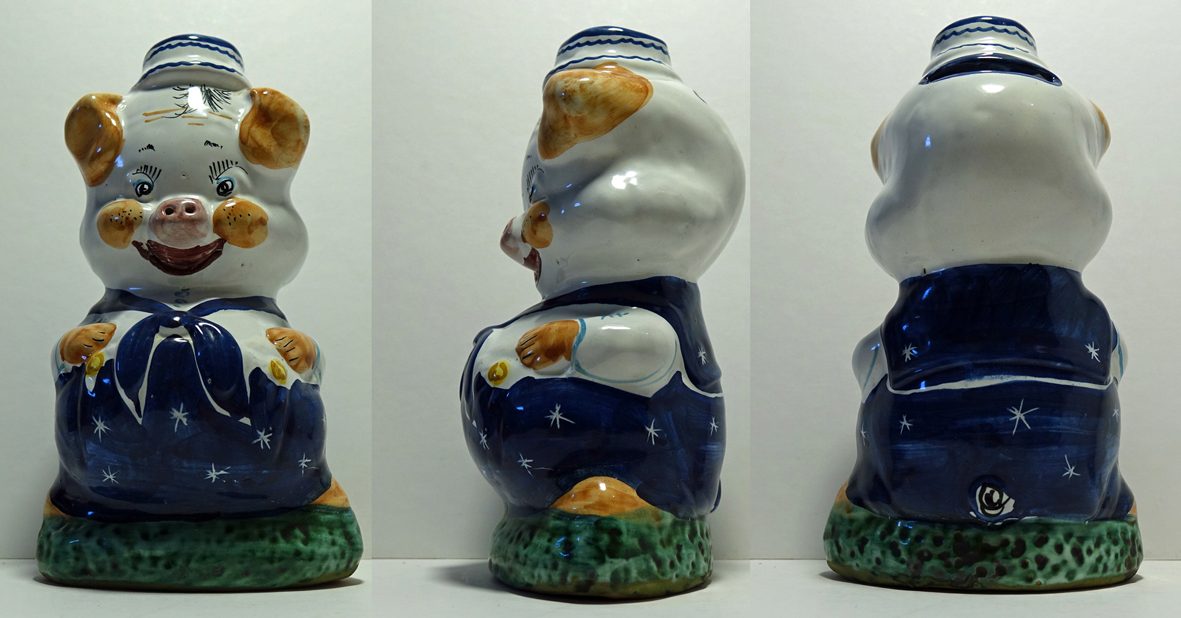
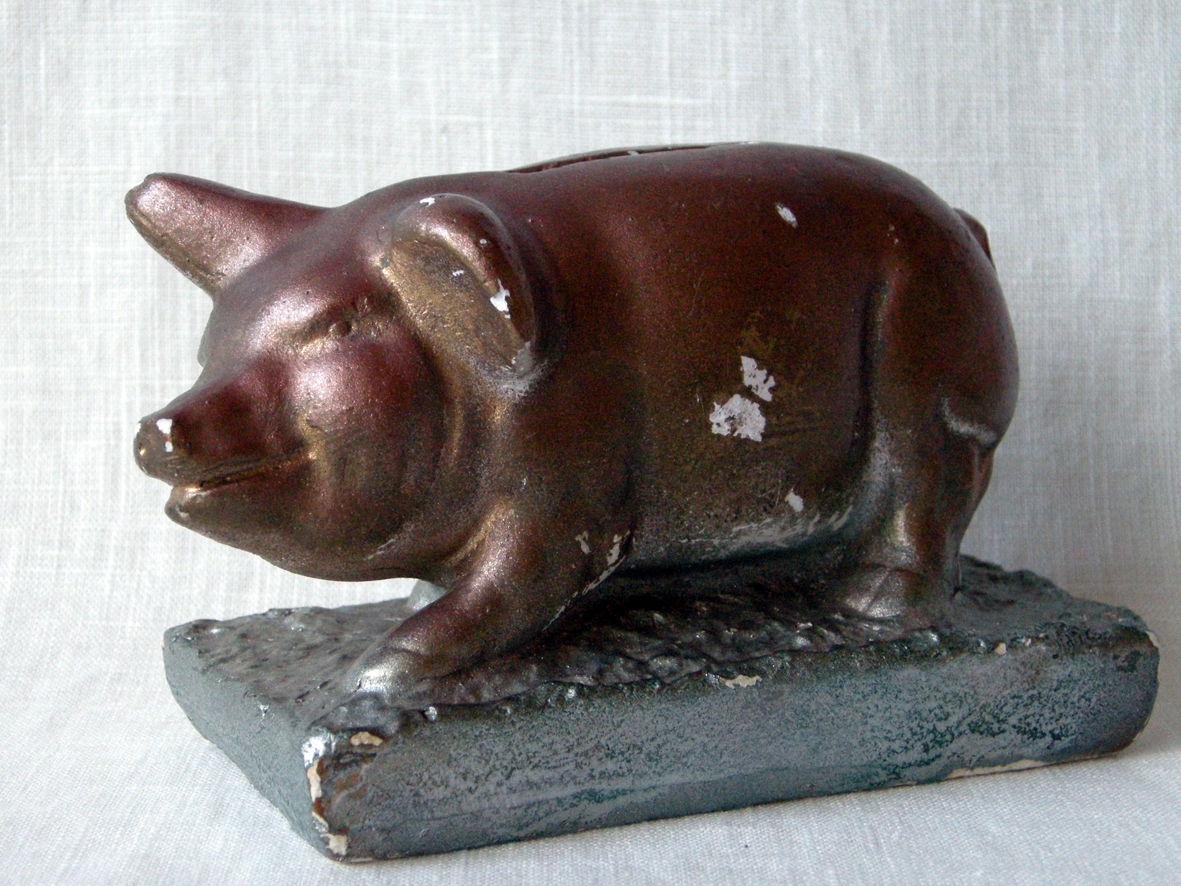
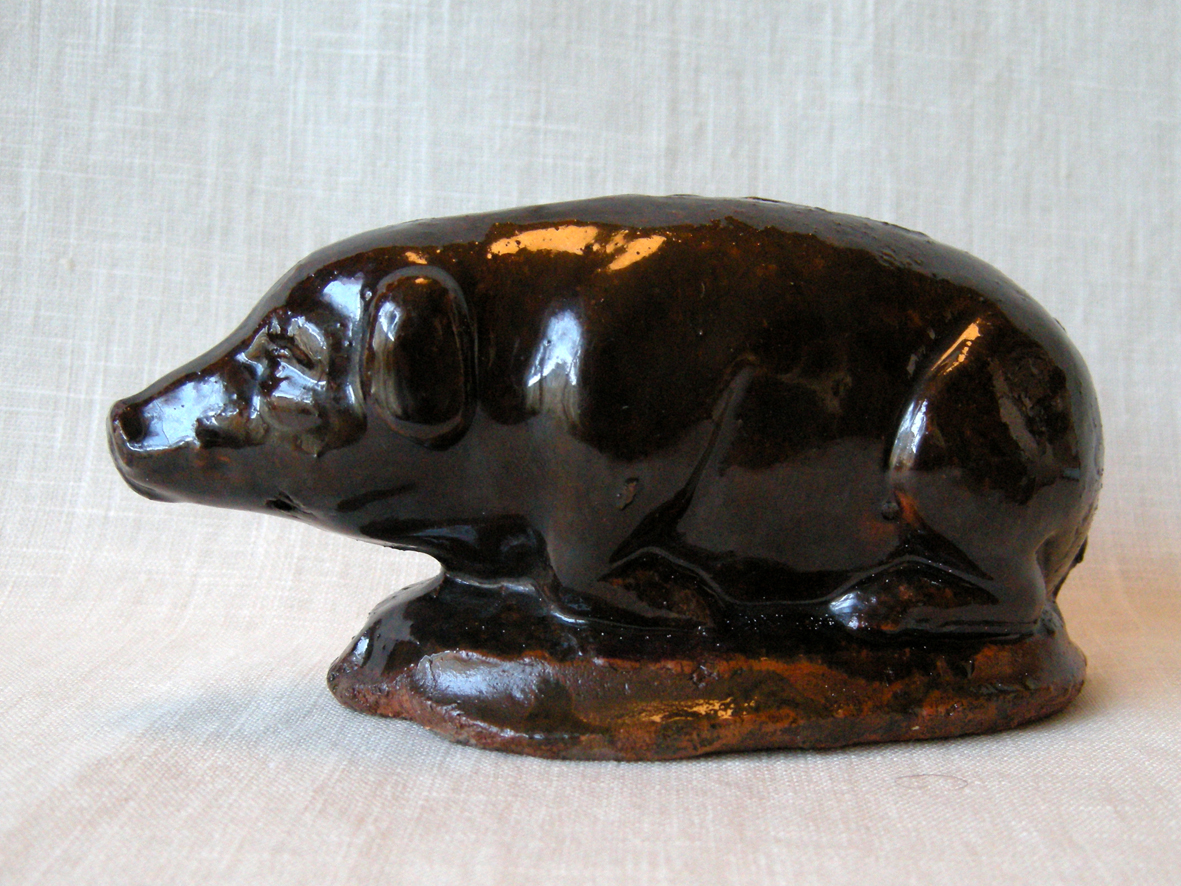
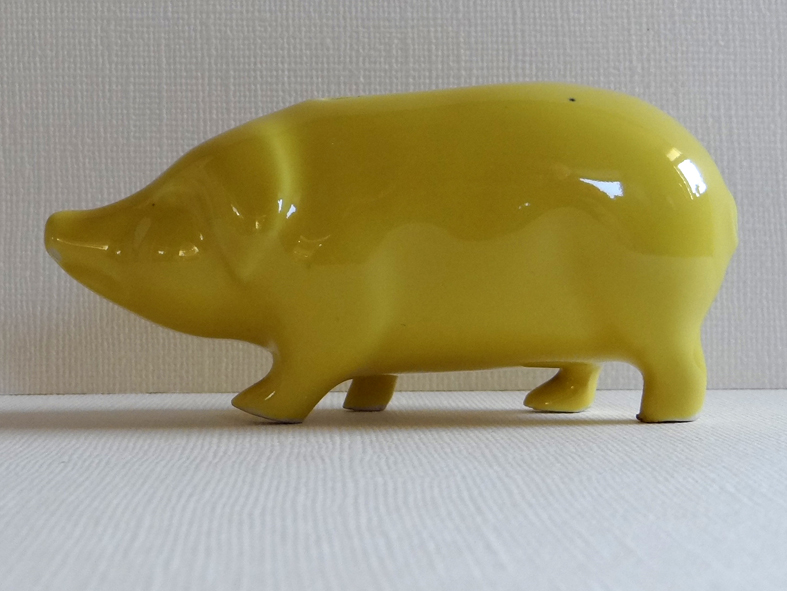
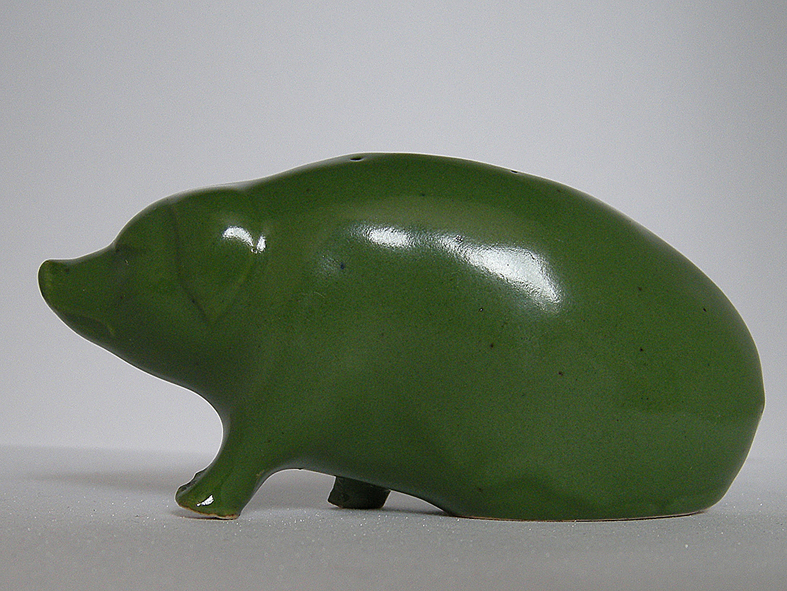
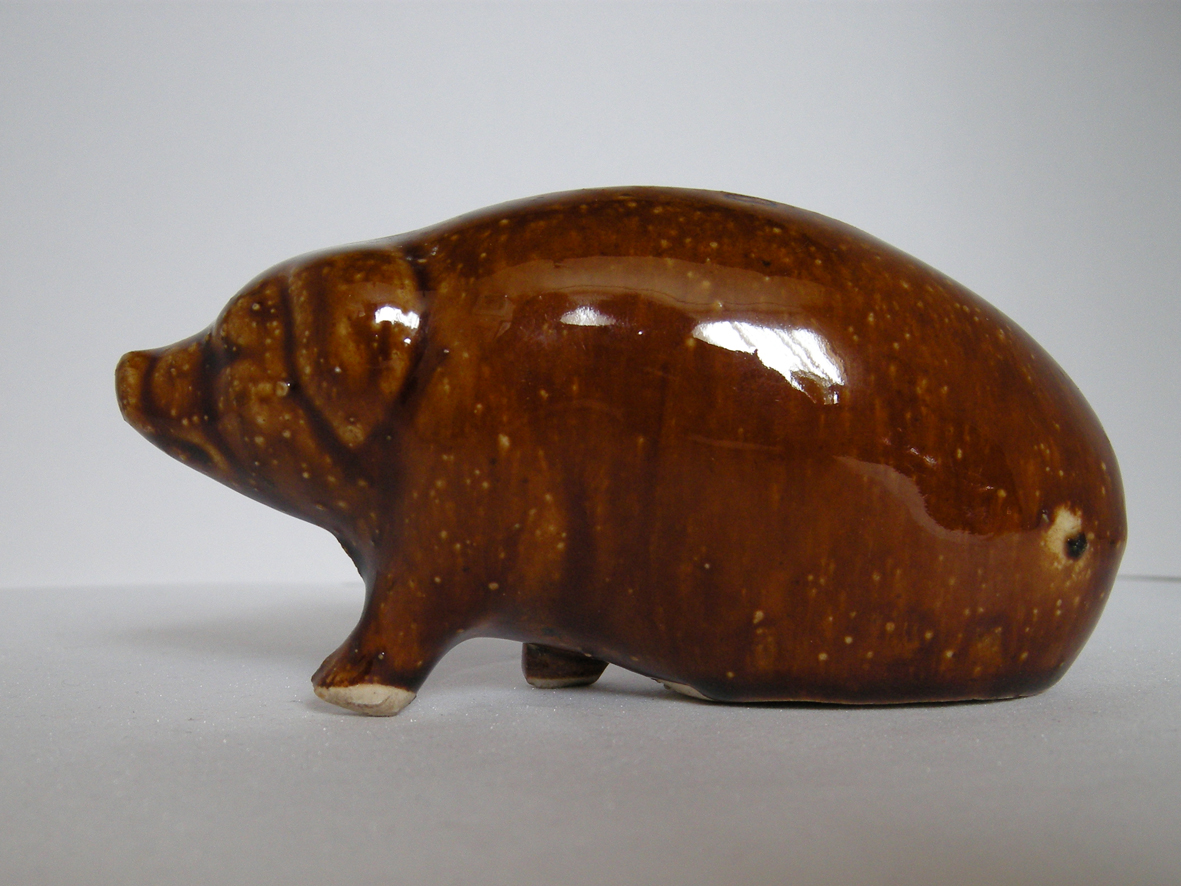
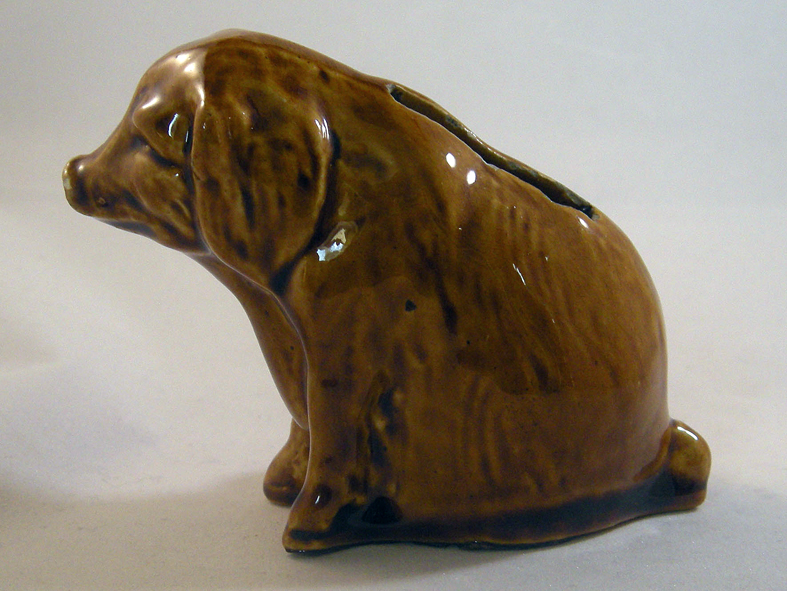
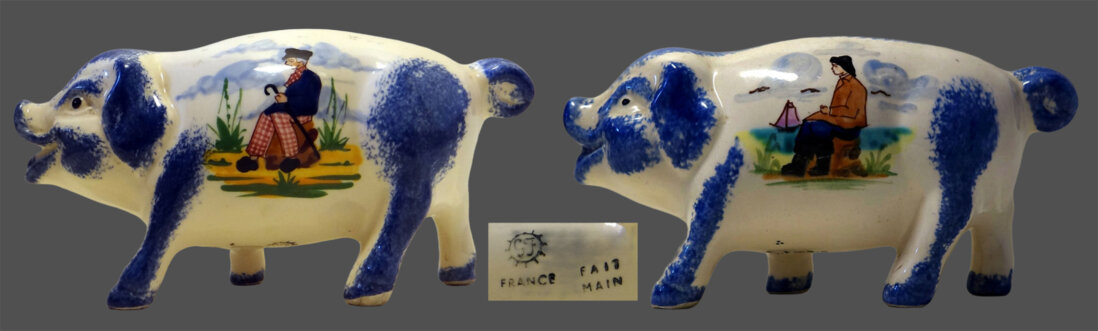
Faience de Devres. Manufacture Gabriel Fourmaintraux (GF). Décor Breizh or Breton. ± 1950? Length 17 cm. Left with seated farmer, right seated fisherman.
Reference book for French Tirelires
Hunting for piggy banks for over 50 years means that I have a large variety in my collection. Collecting more of the same type in different colour variations is not an option and not that exciting. That's why from the past years I focused on antique piggy banks and rediscovered France. I knew few to nothing about the origin of French piggy banks until I discovered the book 'Tirelires – Barbotine, grès et porcelaine' of Maryse Botero in 2007. A book with a lot of information about the often former ‘manufactures’.